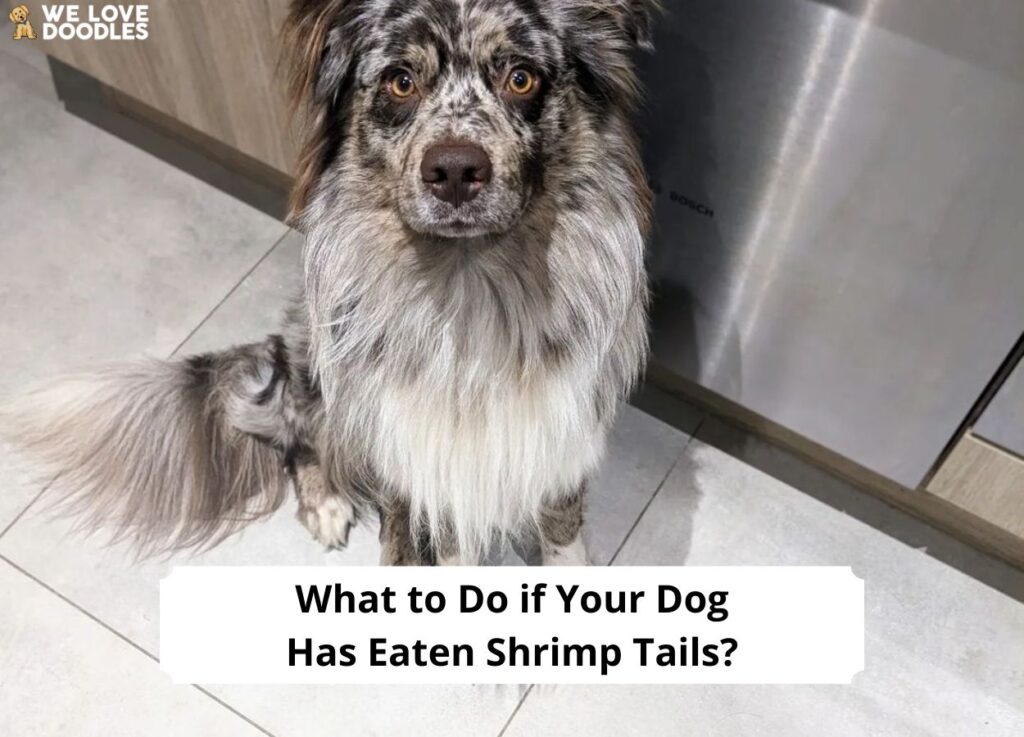
Today, we’ll discuss why shrimp shouldn’t be a scary food for your dog, how to remove the tails, how to spot signs of trouble in a puppy, and what to do if your dog has eaten shrimp tails.
Shrimp is generally safe for dogs to eat in small amounts as a treat on occasion. However, before feeding shrimp to your dog, be sure to remove the shells. Shrimp is a good source of protein for dogs, so there’s no need to avoid them entirely — just keep an eye out for those tails.
Before scrolling further down to the answer to this question, “What to Do if Your Dog Has Eaten Shrimp Tails,” check out: Dog Ate A Sponge: What Do I Do? (2023) and My Dog Ate Melatonin: What Should I Do? (2023).
Health Benefits of Shrimp for Dogs
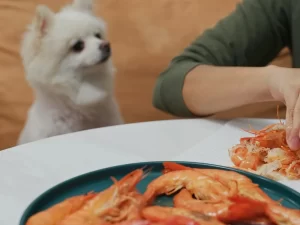
Shrimp can be a nutritious and tasty dog treat when consumed in moderation. It’s a good protein source and contains various nutrients, including selenium, vitamin B12, and omega-3 fatty acids.
However, remember that shrimp should not constitute a significant portion of your dog’s diet. Dogs require a balanced and nutritious diet that meets their specific needs, and owners should offer meals that have been formulated to provide all of the nutrients they require.
How to Easily Remove Shrimp Tails

To keep your dog from eating shrimp tails and getting sick, follow these simple steps for removing the tails, whether the shrimp is cooked or raw:
- With one hand, hold the shrimp by the tail.
- Gently pinch the tail end of the shrimp with your thumb and forefinger and pull it away from the shrimp’s body.
- Repeat with the rest of the shrimp.
If the tails are stubborn, use a small, sharp knife to carefully cut them off.
Bags of frozen shrimp are also available in tailless varieties. They tend to be more expensive, but the additional cost may be worth it to prevent future ingestion accidents by your dog.
Watch for Signs of Shrimp Tail Ingestion

If your dog eats shrimp tails, they may develop digestive problems such as vomiting or diarrhea.
If your dog continues to vomit or have diarrhea after eating shrimp tails, or if they are lethargic, have difficulty breathing, or exhibit any other concerning symptoms, you should contact your veterinarian immediately.
Additionally, keep an eye out for signs of choking. If your dog is choking, acting quickly to remove the object causing the blockage is vital.
Here are a few steps you can take if your dog is choking on a shrimp tail:
- Try to find the tail. If you can see it, carefully remove it with your fingers.
- If you can’t see or remove the tail, try the “abdominal thrust” technique to try to dislodge it. Place your dog on its side and use the heel of your hand to make five quick, firm thrusts to the abdomen.
- If the choking continues, try the “chest thrust” method. Place your dog on its back and use the heel of your hand to make five quick, firm thrusts to the chest.
- Start CPR if your dog is still choking and unconscious. Perform mouth-to-snout resuscitation by closing your dog’s mouth and taking several deep breaths into its nostrils.
If your dog is choking and you cannot clear the obstruction, get to a veterinarian as soon as possible.
How to Help Your Dog Recover After Eating Shrimp Tails

You can try to reduce the chance of your dog experiencing digestive upset by withholding food and water for a short time. Withholding food and water can give your dog’s digestive system a chance to rest and recover.
Diarrhea is an unfortunate side effect of shrimp tail ingestion and can be troublesome to deal with, leading to dehydration and other health problems.
If your dog has diarrhea, consider a few courses of action to help manage symptoms and prevent dehydration.
Offer Small Amounts of Clear Liquids

Offer liquids such as water or low-sodium chicken broth to help prevent dehydration. Pedialyte is another acceptable source of electrolytes. Many pet stores also carry electrolyte solutions formulated specifically for dogs.
If your dog can tolerate liquids, you can gradually increase the amount you offer over the next few days. However, take care not to offer too much at once to allow their kidneys to filter any remaining toxins efficiently.
Withhold Food for a Short Period
You should give your dog’s digestive system a chance to rest. It’s generally safe to withhold food from a dog for 12 to 24 hours. Anything beyond this will put their health at risk and potentially facilitate malnutrition.
After some time passes, gradually introduce small amounts of bland food, such as boiled white rice and boiled lean chicken. You can also add a small amount of canned pumpkin (not pumpkin pie filling) to your dog’s food, as it can help to firm up their stools.
To prepare some bland food for your dog, follow these steps:
- Boil 1/2 cup of white rice in one cup of water for about 20 minutes or until the rice is tender.
- Boil 4 ounces of lean chicken (such as skinless, boneless breast) in one cup of water for about 15 minutes or until fully cooked.
- Shred the chicken into small pieces.
- Mix the cooked rice and chicken and serve.
It’s important to only feed your dog this bland diet for a short period, as it may not provide all of the nutrients they need for long-term health.
Avoid Feeding Your Dog Fatty or Spicy Foods

Fatty food can be harmful to dogs in large amounts because it can contribute to weight gain, digestive issues, and pancreatitis — a serious and potentially life-threatening condition that occurs when the pancreas becomes inflamed.
Symptoms of pancreatitis in dogs include vomiting, diarrhea, abdominal pain, and loss of appetite.
Frequently Asked Questions
Do you still have questions about what to do if your dog eats shrimp tails? Here are some answers to the most commonly asked questions.
No, shrimp tails are not poisonous. Shrimp tails are safe to eat. They are high in protein and low in fat, making them a nutritious addition to a healthy diet. Although some people are allergic to shrimp, the tails themselves contain no toxins or poisons.
If your dog consumes shrimp shells, he or she may experience digestive issues such as vomiting, diarrhea, or abdominal pain. Although shrimp shells are not toxic to dogs, they can be difficult to digest and may cause gastrointestinal irritation or inflammation. Furthermore, the sharp edges of the shells may injure your dog’s mouth, throat, or digestive system.
While shrimp tails are not poisonous to dogs, they can be difficult to digest and may cause digestive problems. Shrimp tails are hard and brittle, and they can cause blockages or tears in your dog’s digestive tract if swallowed whole or in large pieces.
It’s generally recommended not to feed your dog shrimp tails or other seafood shells or bones. Instead, give your dog the edible portion of the shrimp. If you want to give your dog shrimp as a treat, make sure to thoroughly cook them and remove any sharp pieces.
Shrimp tails are not typically hard to digest for humans but can be for animals. Moreover, it’s important to cook shrimp properly.
Overcooked shrimp can become tough and rubbery, making digestion more difficult. Cook shrimp until they are pink and opaque, but not so long that they become tough.
Raw shrimp is difficult to digest and may contain parasites; therefore, it should be avoided for human or animal consumption.
Raw shrimp is hard to digest and could contain parasites, so it is best avoided for human or animal consumption.
Certain fish, such as tuna, swordfish, and mahi-mahi, can contain high levels of mercury, which can be toxic to dogs if consumed in large amounts. Furthermore, fish with small, sharp bones, such as salmon or trout, can cause choking or damage to a dog’s digestive tract.
Conclusion for “What to Do if Your Dog Has Eaten Shrimp Tails”

It’s crucial to keep an eye on your dog and make sure they do not have access to any objects that may be harmful. If your dog has eaten shrimp tails, it is cause for concern, but it will likely not cause too much issue.
Preventing your dog from accessing dangerous foods is the best way to protect its health. You can achieve this by keeping potentially harmful foods out of reach and supervising your dog when they are outside.
If you have concerns about your dog’s safety, you should consult your veterinarian for guidance.
If you find this guide, “What to Do if Your Dog Has Eaten Shrimp Tails,” helpful, check out:
- My Dog Ate Deodorant. What Should I Do? (2023)
- My Dog Ate Coconut Oil. What Should I Do? (2023)
- My Dog Ate Guacamole: What Should I Do? (2023)
Learn more by watching “Can Dogs Eat Shrimp? All You Need to Know!” down below:

Garrett loves animals and is a huge advocate for all Doodle dog breeds. He owns his own Goldendoodle named Kona. In addition, he volunteers at the Humane Society of Silicon Valley, where he fosters dogs and helps animals. Garrett enjoys writing about Doodles and believes that dogs can teach humans more about how to live than humans can teach a dog.
Why Trust We Love Doodles?
At We Love Doodles, we’re a team of writers, veterinarians, and puppy trainers that love dogs. Our team of qualified experts researches and provides reliable information on a wide range of dog topics. Our reviews are based on customer feedback, hands-on testing, and in-depth analysis. We are fully transparent and honest to our community of dog owners and future owners.