Humid and warm weather brings out pests in swarms, and one such pest is the mosquito-like fly known as a gnat. Gnats are extremely irritating insects that are attracted to moisture and the smell of organic debris. You might be wondering how to safely keep gnats off your dog.
Unfortunately, that means you’ll often see gnats on dogs, usually on wet areas like a dog’s nose, eyes, open wounds, and genital areas. Gnats are the cause of constant itching which leads to irritability and restlessness.
Keeping gnats away from dogs is complicated since most store-bought insect repellants can be toxic to canines. While the internet is filled with suggestions and natural remedies to keep gnats away from dogs, not all are effective, and some might even be hazardous to their health.
Since we’re dog lovers ourselves, we’ve compiled a list of practical and safe ways to prevent and get rid of gnats on dogs to help all dog owners.
Before reading this guide “How to Keep Gnats Off Your Dog,” check out: How to Keep Dogs Cool Outside – 5 Ways! (2023) and The 6 Best Flea and Tick Collars for Dogs! (2023).
What Are Gnats and Are They Dangerous to Dogs?

“Gnat” is a term used to describe hundreds of species of flies. These insects may not be as common as the house fly, but they can be dangerous.
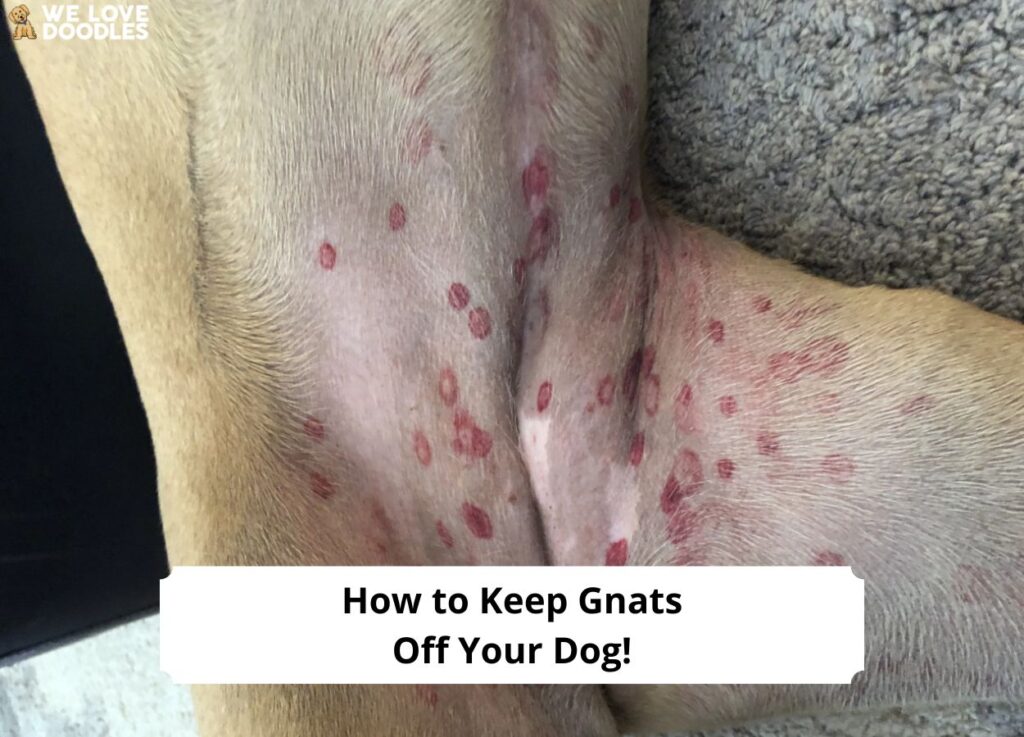
Gnats swarm around moist and humid places and also gather on decaying organic debris. That’s why you’ll often find them around a dog’s nose, eyes, open wounds, or anus. A gnat’s bite can be so bad it can draw blood, and if they lay eggs in an exposed wound, it can cause severe infection.
Older and weaker dogs are more susceptible to infections and diseases brought on by gnats since they have vulnerable immune systems. Moreover, older dogs need expensive medication to treat even the smallest of infections.
Besides infections, allergies, and itching, gnats can also cause more severe problems. For example, fungus gnats can cause a rare disease called pythiosis in pets and humans. Moreover, the eye gnat is attracted to the discharge of a dog’s eyes and can cause conjunctivitis.
The buffalo gnat leaves reddish bulls-eye spots on a dog’s underbelly, which, if not timely discovered and treated, can also lead to secondary parasitic infections in humans.
How to Keep Gnats Away from Your Dog

Let’s look at ways to get rid of gnats that are irritating your precious pup.
1. Keep Your Dog and Its Surroundings Clean
The first step to making sure gnats don’t follow your pup around is making sure they’re clean. Gnats are attracted to unclean and unhealthy fur and coats, so give your dog regular baths with a good quality shampoo, especially when they return from playing outside.
A clean dog that doesn’t smell like organic debris is relatively safe from gnats.
It is also essential to regularly clean your dog’s water and food bowls. Since gnats like moisture, they will probably be attracted to water bowls and wet food. Save your dog from infections by giving it fresh food and water.
Finally, you must ensure your dog’s surroundings are clean, especially the outdoors. Get rid of old and dead leaves in the yard, mop up any puddles of stagnant water, and generally keep your outdoor area clean. Moreover, keeping your dog indoors is the best way to prevent gnats when the weather is hot and humid.
2. Apply Petroleum Jelly on Your Dog’s Ears and Underbelly
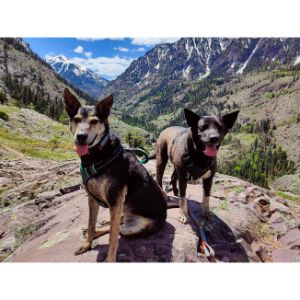
Gnats are most attracted to a dog’s ears and underbelly because the sparse hair on these parts makes biting easier. Rub some petroleum jelly on your dog’s ears and underbelly to prevent these annoying insects from biting your canine.
If your dog likes to play outside often, you may reapply the petroleum jelly after suitable intervals. However, indoor dogs need only one application per day.
3. Apply Vanilla Extract to Your Dog’s Collar
Like planting Marigold will keep gnats from swarming your lawn, a dash of vanilla extract on your dog’s collar will prevent them from coming close to your dog when it enjoys the outdoors.
However, the scent of vanilla could attract fruit flies, but at least they’re not as harmful!
4. Apply Safe Bug Repellents on Your Dog’s Face
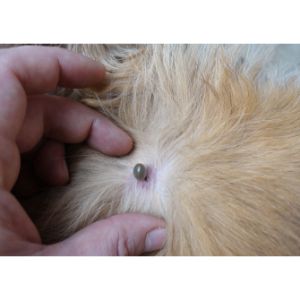
To protect your dog’s eyes from gnats, use a soft cloth and gently rub a safe bug repellent on their face, around the eyes, and the nose. Be careful not to use too much, and never spray the repellent directly onto the face, especially in the eyes.
Safe bug repellants are chemical-free and 100% natural. Bug sprays made with lemon and eucalyptus are the best options.
5. Use Insect Repellants Containing Essential Oils
Although essential oils are considered relatively safe for dogs, there isn’t much research on the subject. As such, use insect repellents containing essential oils with caution.
According to some studies, some oils deemed relatively safe to use as insect repellents are Neem, Eucalyptus, and Cedarwood. While Neem isn’t toxic, it should not be used on sensitive skin, so if your dog has dermatitis or some other skin condition, avoid using this oil.
On the contrary, eucalyptus and cedarwood are effective insect repellents that are fairly safe for dogs.
Remember: if you’re using essential oils to make insect repellents at home, proper dilution is extremely important for it to be safe and effective — half and half is usually the safest approach.
How to Prevent Gnats From Infesting Your Home

Here are some ways to prevent annoying gnats from infesting your home.
1. Plant Marigolds in Your Garden
The vanilla scent of marigolds repels gnats. So, if you have a green thumb, planting marigolds in your garden is the most inexpensive and surefire way to keep gnats away from your home and your dog.
2. Maintain a Clean Outdoor Area

One thing insects love to swarm around in is garbage, refuse, and decomposing waste — this includes dog poop as well! So, make sure you regularly empty and clean your garbage cans. Also, make sure the bins are tightly sealed when they’re full.
Moreover, ensure no stagnant or dirty water accumulates around or in your home since this is also a breeding ground for flies and gnats. Finally, make sure your drainage system is working fine, and have a professional inspect and clean your gutters every three to four months.
Here are some other aspects to consider:
- Regularly clean bird baths or water bowls.
- Allow grass to dry between watering to ensure there are no puddles.
- Dispose of compost (rotting weeds, fruits, vegetables, etc.) and trash away from your house.
- Maintain separate bins for wet trash.
3. Apply Treatments to Your Lawn
Commercial gnat remedies promise to tackle the problem of gnats on dogs by applying different treatments and pesticides to your lawn. These treatments are long-lasting and very effective.
However, while some of these applications are made using natural oils which are safe for animals and humans, most contain harsher chemicals. So, make sure to do proper research and consult with pest control experts before choosing to go with this option.
Some toxic ingredients to look out for if you’re buying a gnat pesticide are:
- Citrus oil derivatives, such as d-Limonene and Linalool
- Chlorpyrifos
- DEET (N,N-diethyl-meta-toluamide)
- Disulfoton
- Fenoxycarb
- Malathion
- Methomyl
- Methoxychlor
- Pyrethrin
- Parathion
- Propoxur
- Terbufos
Also, look for fungi or mold around your yard. Remove any rotting weeds or vegetables from your garden (if you’ve planted any), and if you have a compost pile, make sure it is covered.
4. Use Insect Traps

You can place sticky traps where gnats usually swarm in or around your house for immediate prevention. Place some fruit on the trap, and flies and gnats will stick to the trap within minutes. Although this is a temporary solution, most people find this to be an inexpensive, easy, and relatively safe option.
Other examples of traps for gnats include:
- A banana peel trap
- Flypaper
If you’re looking for a long-term and more effective investment, commercial insect repellents such as an electronic bug zapper are the best choice. Simply hang it on your porch, and the built-in lighting will attract gnats and all kinds of bugs and electrocute them. Also, it’s well out of your dog’s reach, so you don’t need to worry about safety.
Frequently Asked Questions

Gnats tend to bite dogs and form itchy, red rashes. When exposed to humid and unclean conditions, these rashes can become infected and lead to secondary infections.
Applying a dash of vanilla essence or vanilla oil on your dog’s collar will keep gnats away since they cannot stand the smell of vanilla. Also, applying a safe bug repellent on your dog’s face, especially around the eyes, will help keep gnats at bay.
If you spot little black gnats on your dog, you’re most likely dealing with a flea infestation. These are flat bugs, about 1/8th of an inch, that can often be seen jumping around your dog’s fur.
Gnats are attracted to moisture, unclean fur, and open wounds. So, if your dog is dirty or injured, it could suffer from a gnat infestation.
Conclusion for “How to Keep Gnats Off Your Dog”

Gnats on dogs are a nuisance and a danger to the health of our beloved four-legged friends. Therefore, we must keep our dogs safe from these pesky insects.
Keeping your dog and home safe from gnats involves maintaining your pet’s hygiene and keeping your environment clean. Eliminating breeding grounds for gnats such as open bins, stagnant water, and clogged drains is the first step to preventing gnat infestation.
Moreover, make sure to involve your community and spread awareness about maintaining proper hygiene to avoid swarms of gnats torturing animals in your neighborhood.
In addition, be careful of using home remedies to eradicate gnats, especially those involving vinegar and essential oils. Most of their ingredients are safe for humans but can be dangerous to dogs. So, before opting for a strategy, know what’s best for your dog.
If you find this guide, “How to Keep Gnats Off Your Dog,” helpful, check out:
- How to Clean Goldendoodle Ear Hair? (2023)
- How to Remove a Tick From a Dog Without Tweezers? (2023)
- How to Deworm a Puppy Naturally (2023)
Learn more by watching “How Do I Keep Flies and Gnats Off My Dog?” down below:

Garrett loves animals and is a huge advocate for all Doodle dog breeds. He owns his own Goldendoodle named Kona. In addition, he volunteers at the Humane Society of Silicon Valley, where he fosters dogs and helps animals. Garrett enjoys writing about Doodles and believes that dogs can teach humans more about how to live than humans can teach a dog.
Why Trust We Love Doodles?
At We Love Doodles, we’re a team of writers, veterinarians, and puppy trainers that love dogs. Our team of qualified experts researches and provides reliable information on a wide range of dog topics. Our reviews are based on customer feedback, hands-on testing, and in-depth analysis. We are fully transparent and honest to our community of dog owners and future owners.