
Shelties and Collies are two distinct dog breeds, but they do look very similar, as we’ll cover in this Sheltie vs Collie guide. Some people have a hard time telling them apart.
There are differences including their sizes, temperament, and their history. Understanding these differences makes it easier to decide which of the breeds is best for your family.
Before reading this comparison between the Sheltie vs Collie, check out: 14 Best Shetland Sheepdog Rescues in the USA! (2023) and 12 Best Border Collie Breeders in the USA! (2023).
Are Shelties and Collies Related?
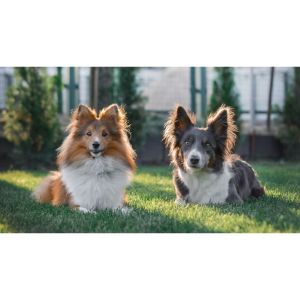
Shelties and Collies share a lot of characteristics. Shelties are a breed of herding dog that originated in the Shetland Islands. Collies are also herding dogs, but they originated in Scotland.
They both have long, thick coats, as well as intelligence, loyalty, and affectionate personalities that make them similar in appearance and temperament.
A Rough Collie was originally crossed with a smaller breed like an Icelandic Sheepdog and a King Charles Spaniel to create a Sheltie. Thus, Shelties and Rough Collies have a lot in common, both physically and temperamentally.
There are three colors of Collies and Shelties: sable, tricolor, and blue merle. Their intelligence, trainability, and affection make them excellent family pets. Both breeds are known for their loyalty and protection, making them good watchdogs.
Even though they differ in size and weight, the two breeds are considered closely related. The smaller size and unique personality of Shelties attract many people who love Collies.
Sheltie History
In 1909, the breed was registered with the Scottish Shetland Sheepdog Club. It originated in the Shetland Islands. In March 1909, the English Kennel Club recognized both these registries and the breed.
A Shetland Collie was first registered there in October 1909 but was changed to Shetland Sheepdog. Shelties have also been called Lilliputian Collies, Toonies, Peeries, Fairies, and Miniatures.
A group of small islands located in the Northern Atlantic, the Shetland Islands are exposed to the vagaries of the sea. A sparse amount of vegetation covers these rugged, rocky mountains. A few animals that come from the islands, such as the Shetland Pony and the Shetland Sheepdog, are also rough and rugged.
Historically, it is believed that the breed’s origin can be traced back to a Northern Spitz-type dog, the original Pomeranian, the original King Charles Spaniel, and other dogs native to the islands, along with the Scotch Collie, brought from Scandinavia by the early inhabitants. A mystery still surrounds the mix of ingredients that went into the development of this breed.
Collie History
The Romans created the breed known today as the Collie when they conquered Britain and mixed Roman herding stock with local dogs. The humble sheepdog has a 2,000-year-old heritage, but it is virtually unknown outside of Scotland, where it was used as a guard dog and shepherd.
That changed under Queen Victoria. As she visited Balmoral Castle frequently in the Scottish Highlands, she became accustomed to Collies. She led the movement to gain worldwide recognition for the herding breed in the late 1800s.
Due to their strong work ethic and incredible skill, Collies worked as guide dogs, water rescue dogs, and movie stars over the years. A notable appearance of the breed was in Lassie Come Home, the movie and book. As a result, the breed became a popular choice as a family pet, which it remains to this day.
Are Shelties and Miniature Collies the Same?

Shelties and Miniature Collies are not the same. Ideally, you should shop for both breeds from a reputable breeder. This breed is much like a Collie, but smaller and with a predictable temperament and appearance.
There is no such thing as a Miniature Collie, at least not as a recognized breed by major kennel clubs. Some breeders may use the term “Miniature Collie” to refer to a smaller version of the Rough Collie, which may be achieved through breeding smaller Collies or breeding Collies with other small breeds.
However, this is not a recognized or standardized breed. There is no guarantee that a dog advertised as a “Miniature Collie” will look or behave like a Collie.
Shetland Sheepdogs, also known as Shelties, are a distinct breed recognized by major kennel clubs such as the American Kennel Club. While they may resemble Collies in appearance and temperament, they are a separate breed with their own breed standard.
Are Shelties and Rough Collies Related?

Shetland Sheepdogs (Shelties) and Rough Collies are related. In fact, Shelties were developed by crossing Rough Collies with smaller breeds such as the Icelandic Sheepdog and King Charles Spaniel.
Shelties share many physical and temperamental characteristics with their larger cousins, the Rough Collies. These breeds have a double coat of long, thick hair, and they are available in a variety of colors, including sable, tricolor, and blue merle.
The dogs are both highly intelligent, trainable, and affectionate, so they would make excellent pets for a family. These breeds are also known for their loyalty and protective nature, making them excellent watchdogs.
The two breeds are closely related despite some differences, such as size and weight. Originally bred from Rough Collies and smaller dogs, Shelties are also called Miniature Collies.
Both Shelties and Rough Collies are recognized breeds by major kennel clubs such as the American Kennel Club. They have their own breed standards, which describe the ideal physical and temperamental characteristics of each breed.
Collie Characteristics

Collies are medium-sized dogs, with males standing 24 to 26 inches (61 to 66 cm) tall at the shoulder and weighing 60 to 75 pounds (27 to 34 kg), while females stand 22 to 24 inches (56 to 61 cm) tall and weigh 50 to 65 pounds (23 to 29 kg).
Both rough and smooth varieties of their coats are long, thick, and double. Short-haired dogs have dense coats whereas long-haired dogs have flowing coats and a mane around their neck. Collies can be white, blue merle, or sable.
In addition to being highly trainable, this breed excels in obedience competitions, agility trials, and herding competitions. They require regular exercise and mental stimulation as they are fairly active dogs.
Playing fetch, running, and going on walks are some of their favorite things to do, but they don’t have to be busy all the time. Most of them are content just being cuddled and getting plenty of attention.
It is generally known that Collies have a healthy disposition, but they are also susceptible to certain health conditions like hip dysplasia, progressive retinal atrophy, and Collie eye anomalies.
In order to prevent mats and tangles, Rough Collies must be groomed regularly. Regular brushing will keep the smooth collie’s coat healthy and shiny, but it requires less grooming.
Sheltie Characteristics
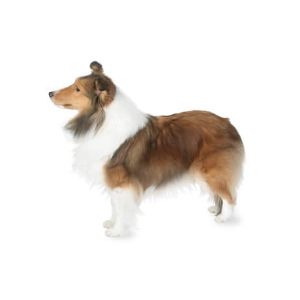
A Sheltie is a small dog, standing 13 to 16 inches (33 to 41 cm) at the shoulder and weighing 14 to 27 pounds (six to 12 kg), while a female stands 12 to 16 inches (30 to 41 cm) high and weighs 12 to 22 pounds (five to 10 kg).
Sables, tricolors, and blue merles are some of the colors they have on their double coats. You also need to groom them often to prevent tangles and mats in the coat. Loyalty, intelligence, and affection are some of the qualities associated with Shelties. They make excellent family pets because they get along well with children.
Their training abilities also make them excellent at obedience, agility, and herding. It is important for Shelties to have mental stimulation and exercise on a daily basis. Shelties are moderately active dogs.
Their favorite activities include running, walking, and playing fetch, but they also enjoy spending time with their families. While they are usually pretty healthy, some health conditions such as hip dysplasia, progressive retinal atrophy, and Von Willebrand disease are common for them.
As vocal dogs, Shelties may bark excessively if not properly trained. Protecting their family may cause shelties to exhibit herding behaviors, such as nipping at heels.
Do Shelties Make Good Family Pets?

Shetland Sheepdogs make excellent family pets. Shelties make wonderful family pets, bringing their owners joy and companionship. They do best in a family environment where they can get plenty of love and attention as they are loving, loyal, and intelligent.
The breed is loyal, affectionate, and protective of its owners, making them the perfect watchdog. Aside from being highly intelligent, Shelties are also highly trainable and enjoy being part of the activities that their families do together.
When properly socialized, they can be excellent with children and other pets, and they are known for their gentle and playful natures when socialized properly.
Shelties do require daily exercise and mental stimulation to prevent boredom and destructive behavior. They enjoy walks, runs, and playing fetch, but can also participate in obedience, agility, and herding competitions to fulfill their physical and mental needs. Additionally, their long, thick coats require regular grooming to prevent mats and tangles.
Do Collies Make Good Family Pets?

Collies make excellent family pets. Having a Collie in the family brings comfort and companionship to the whole family. These dogs thrive in a family environment with lots of love and attention. They are loving and intelligent dogs.
Their loyal, affectionate, and protective nature makes them excellent watchdogs. The breed is also highly intelligent and trainable, excelling at obedience, agility, and herding competitions. Their gentle nature makes them ideal companions for children and pets when socialized correctly.
Collies do require daily exercise and mental stimulation to prevent boredom and destructive behavior. They enjoy walks, runs, and playing fetch, but can also participate in various activities and sports to fulfill their physical and mental needs. Additionally, their long coats require regular grooming to prevent mats and tangles.
Frequently Asked Questions
Shelties tend to be more active and energetic than Collies, though they both require exercise and mental stimulation. Ultimately, the choice may come down to size; Collies are much larger.
While Collies are one of the smartest dog breeds, Shelties are believed to be the smartest.
Shelties can be shy dogs when they’re first acclimating to new experiences, so socialization is important. They are active and intelligent, meaning they need physical and mental stimulation.
Conclusion for “Sheltie vs Collie: What’s the Difference”

In spite of the fact that Collies and Shelties are related breeds, they have distinct breed standards and are recognized by different kennel clubs.
Shelties are recognized by the AKC as a member of the Herding Group, by the UKC as a member of the Herding Dog Group, by the KC as a member of the Pastoral Group, and by the ANKC as a member of the Working Dog Group. Collies are recognized by the same kennel clubs and fall into the same groups in each club.
Collies weigh 60 to 75 pounds, while Shelties are much smaller, weighing only 15 to 25 pounds.
For more breed comparisons like this guide between the Sheltie and Collie, check out:
- Sheepadoodle vs Bernedoodle – Dog Breed Comparison! (2023)
- F1 vs F1B Goldendoodle: What’s the difference? (2023)
Learn more by watching “Shetland Sheepdog Sheltie vs Collie – Similarities and Differences” down below:

Garrett loves animals and is a huge advocate for all Doodle dog breeds. He owns his own Goldendoodle named Kona. In addition, he volunteers at the Humane Society of Silicon Valley, where he fosters dogs and helps animals. Garrett enjoys writing about Doodles and believes that dogs can teach humans more about how to live than humans can teach a dog.
Why Trust We Love Doodles?
At We Love Doodles, we’re a team of writers, veterinarians, and puppy trainers that love dogs. Our team of qualified experts researches and provides reliable information on a wide range of dog topics. Our reviews are based on customer feedback, hands-on testing, and in-depth analysis. We are fully transparent and honest to our community of dog owners and future owners.